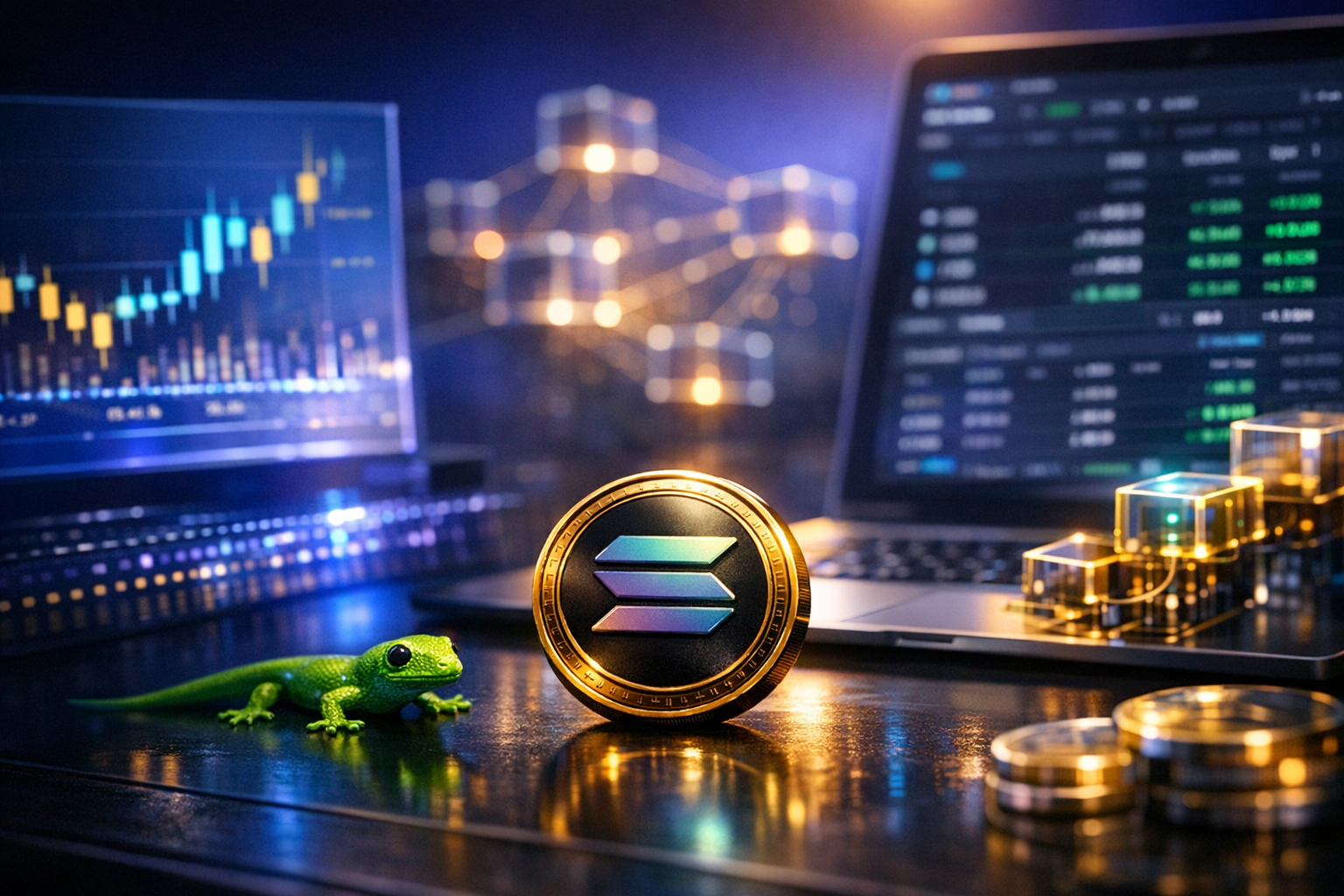
A practical, step-by-step CoinGecko listing guide for Solana tokens—requirements, forms, timelines, and how to improve your approval odds.
You launched the token.
You survived the first 24 hours of chaos.
And now you’re staring at the same question every Solana founder eventually asks:
“How do I get my token on CoinGecko… and not look like a ghost town when people click it?”
CoinGecko is one of the first places real buyers check to validate a project. It’s not just a “nice-to-have” badge—getting listed can improve discoverability, trust, and how quickly your token spreads beyond your existing community.
But CoinGecko isn’t magic. If your on-chain data, liquidity, or token info looks messy, you’ll either get delayed… or rejected.
Below is the practical playbook: what CoinGecko reviewers look for, what to prepare, how to submit, and how to set your token up so the listing actually helps you.
TL;DR (save this)
If you want the highest odds of a smooth CoinGecko listing for a Solana token:
- Have a real market: non-trivial liquidity, consistent trades, and a clean pair on a major Solana DEX aggregator.
- Prepare a “proof pack”: contract address, explorer links, DEX pair links, official socials, logo, and project description.
- Make your data easy to verify: consistent token metadata, public team/project links, and no obvious copy-paste spam.
- After listing, focus on healthy visibility signals: stable liquidity, a believable trade pattern, and community activity.
Want to estimate what kind of activity you’ll need to look credible on charts? Use the Calculator.
Why CoinGecko listings move the needle (when done right)
Think of CoinGecko like a “public profile” for your token.
When someone hears about you on X or in Telegram, they usually do one of two things:
- Search your ticker on CoinGecko
- Open DexScreener and check the chart
If they can’t find you on CoinGecko, you’re instantly “smaller” in their mind—whether that’s fair or not.
A CoinGecko listing can help with:
- Credibility: people trust tokens more when they show up on major data sites
- Distribution: third-party apps and dashboards often pull CoinGecko data
- Discovery: “Top gainers,” categories, and search can bring passive traffic
But here’s the catch.
If your CoinGecko page shows thin liquidity, zero volume, broken links, or mismatched token info, it can backfire. You don’t just lose the upside—you give skeptics ammo.
CoinGecko vs CoinMarketCap vs DexScreener (quick comparison)

You’ll hear founders argue about which listing matters most. They all matter—just in different ways.
| Platform | Best for | What it cares about most | Typical impact for new Solana tokens | |---|---|---|---| | CoinGecko | Trust + discovery | Verifiable info + market data | Strong “legit check” for retail | | CoinMarketCap | Broader mainstream reach | Structured verification + data consistency | Big badge effect, sometimes slower | | DexScreener | Real-time trading visibility | On-chain activity + pairs | Fast momentum, fastest feedback loop |
If you’re working on CoinMarketCap too, we already covered that process in our separate guide (and yes, CMC can be stricter). The smart move is to treat CoinGecko as the “clean foundation,” then build outward.
CoinGecko requirements: what reviewers actually check
CoinGecko doesn’t publish a single “do X and you’re guaranteed” rulebook. But in practice, listings get approved faster when reviewers can quickly verify:
1) You are the official project
They want to see:
- Official website
- Official X (Twitter), Telegram, Discord, etc.
- Consistent branding (same name, same logo, same tickers everywhere)
If your socials look like they were created yesterday and have 3 followers, you can still get listed—but expect more scrutiny.
2) Your token is real, deployed, and traceable
On Solana, that means providing:
- Token mint address
- Explorer link (commonly Solscan)
- DEX pair link(s)
Pro tip: make the reviewer’s job easy. If they have to hunt, you wait.
3) There’s a real market with verifiable price discovery
CoinGecko wants to track a price that isn’t “one wallet trading with itself for $7.”
In plain English, they look for:
- Meaningful liquidity (even $10k–$50k can be enough early on, depending on your niche)
- Consistent volume across multiple time windows
- A believable holder + trader distribution
If your token’s entire volume is a single burst followed by silence, it looks artificial.
4) Your info is not spammy or misleading
The fastest way to get delayed:
- Copying another project’s description word-for-word
- Using misleading claims (“official partnership with Solana Foundation”)
- Broken links or placeholder websites
CoinGecko is a data product. They want clean data.
For Solana technical references, CoinGecko and reviewers often rely on official ecosystem documentation like the Solana docs: https://solana.com/docs
Step-by-step: how to submit your Solana token to CoinGecko

Let’s walk it like a checklist you can actually use.
Step 1: Clean up your “public identity” (30–60 minutes)
Before you submit, make sure your basics are consistent:
- Token name and ticker match across website + socials
- Logo is high-quality (at least 512×512 is a safe target)
- Website has a clear “What is this token?” section
- Add a simple “Links” area: X, Telegram/Discord, DexScreener, explorer
This step sounds cosmetic, but it affects approval speed more than you’d think.
Step 2: Make sure market data looks trackable (same day)
CoinGecko needs to reliably track:
- Price
- Volume
- Liquidity
- Markets (pairs)
If you’re on Solana, many teams route liquidity and trading through common venues and aggregators.
If you’re actively building momentum, don’t wing your trade pattern. Plan it.
- Use the Calculator to map out a realistic daily volume target based on your liquidity.
- Build the campaign path in Get Started so chain choice, pricing, and rollout stay aligned.
- If visibility is part of the listing push, pair the prep with the DexScreener Trending Bot so discovery and listing readiness move together.
If you’re new to automation, skim Complete Crypto Volume Bot Guide for the “big picture” before you touch anything.
Step 3: Gather your “proof pack” (15 minutes)
Have these ready in one doc:
- Token name + ticker
- Token mint address
- Explorer link (Solscan link is common)
- DexScreener link (if you’re optimizing visibility there too)
- DEX/market links (pair pages)
- Official website
- Official socials
- Project description (2–4 sentences)
- Category tags (meme, DeFi, gaming, infra—whatever fits)
This is the difference between “review in 3 days” and “back-and-forth for 3 weeks.”
Step 4: Submit to CoinGecko (15–30 minutes)
CoinGecko has a token submission flow. You’ll paste your info, links, and market details.
Important: do not spam multiple submissions unless instructed. Duplicate submissions can slow you down.
Step 5: Wait + monitor (typical 3–14 days)
Timelines vary a lot. From what teams commonly see:
- Fast approvals: 3–7 days (clean data, decent liquidity, easy verification)
- Normal approvals: 7–14 days
- Slow cases: 2–6+ weeks (missing info, questionable volume patterns, unclear official ownership)
While you wait, keep your market healthy and your links consistent. Don’t rename the token on Tuesday and rebrand again on Friday.
The #1 reason listings stall: your market looks “unconvincing”
Here’s an analogy.
CoinGecko reviewers are like bouncers at a venue. They’re not trying to ruin your night—they’re trying to keep out obvious fakes.
If your token shows:
- Very low liquidity (example: $2,000)
- Huge volume spikes (example: $500,000 in 10 minutes)
- Then nothing for hours
…it reads like someone propped the chart up for a screenshot.
What tends to look healthier:
- Liquidity that matches your goal (often $10k–$100k early, depending on launch)
- Volume that spreads across the day
- More natural trade sizes (not identical buys every 12 seconds)
If you’re building visibility on Solana, you’ll also want to understand how ranking systems react to volume velocity and consistency. Start here:
And if you’re optimizing trade patterns, this is the practical follow-up:
Common CoinGecko rejections (and how to fix them)
Let’s get brutally practical. These are the ones I see most often.
1) “Insufficient market data”
What it usually means: liquidity is too thin, volume is inconsistent, or markets aren’t clearly trackable.
Fix:
- Add/strengthen liquidity (even moving from $5k → $25k can change perception)
- Ensure you have a clear, active main pair
- Keep activity consistent for 3–7 days before re-applying
2) “Official links cannot be verified”
What it usually means: your website/socials don’t clearly prove you own the token.
Fix:
- Put the token mint and DexScreener link directly on your website
- Pin an X post with the contract address
- Keep the same brand name across platforms
3) “Duplicated / misleading project”
What it usually means: your branding or description looks copied, or the token name is too similar to an existing asset.
Fix:
- Rewrite your description in your own voice
- Clarify utility and roadmap in 3–5 bullets
- Avoid “official” language unless you can prove it
4) “Wrong chain / incorrect contract details”
What it usually means: mismatched addresses, wrong decimals, or linking to the wrong asset.
Fix:
- Double-check mint address and explorers
- Ensure all links point to the exact same token
After you’re listed: how to make the listing actually work for you
Getting listed is step one.
Step two is making sure that when someone lands on your CoinGecko page, they don’t bounce in 10 seconds.
1) Tighten your “trust loop”
When someone clicks through, they should quickly find:
- Website that loads fast
- Socials that look alive (recent posts, replies, community chatter)
- A chart that doesn’t look botted-to-death
If your token is also competing for attention on DexScreener, consider stacking visibility tools:
- Features for the overview of automation and growth modules
- DexScreener Trending Bot for ranking visibility
- DexScreener Reactions for the social-proof layer that can lift CTR
2) Maintain “chart hygiene” (this matters more than hype)
Even if you’re using automation, your goal should be realistic activity simulation, not clownish spikes.
Healthy patterns typically include:
- Mixed trade sizes (example: 0.2 SOL, 0.7 SOL, 1.3 SOL—not the same size forever)
- Natural gaps (people sleep; markets breathe)
- Volume that roughly matches liquidity (a common sanity check)
If you want to build a sustainable playbook, start with the basics and scale up.
The How to Use guide walks you through setup choices without turning it into a developer lecture.
3) Don’t ignore holders (CoinGecko traffic is “cold”)
CoinGecko visitors aren’t your Telegram regulars. They’re colder, more skeptical, and faster to leave.
So when they show up, you want:
- A holder base that doesn’t look like 12 wallets
- A distribution that isn’t obviously “team + two friends + LP wallet”
If you’re focusing on holder growth, you’ll want to check:
- /features/holder-booster
(And yes: you still need to keep things compliant and ethical. The goal is visibility and momentum, not deception.)
A simple “CoinGecko readiness score” you can use today
If you like quick scoring systems, rate yourself 0–2 on each item:
- Identity (0–2): consistent branding, logo, website, pinned contract post
- Traceability (0–2): explorer links, DEX links, verified mint address everywhere
- Market quality (0–2): adequate liquidity + consistent volume for at least 72 hours
- Community (0–2): active X + Telegram/Discord with real engagement
- Data cleanliness (0–2): no broken links, clear description, no misleading claims
8–10: you’re likely ready
5–7: submit if you want, but fix weak points now
0–4: you’ll probably stall—clean it up first
If you’re unsure what “adequate volume” looks like relative to liquidity, plan it with the Calculator, then map the rollout through Get Started.
Mini case study: the “invisible token” problem (and the fix)
I’ve seen this exact scenario play out.
A team launches a meme token with $12k liquidity. Their chart pops early—then dies. They apply to CoinGecko on day one and hear nothing.
Two weeks later, they try again… still nothing.
What changed on the successful third attempt?
- They increased liquidity to ~$35k
- They kept volume consistent for a week (no single absurd spike)
- They pinned the contract on X and added the mint + chart links to the website homepage
- They cleaned up branding (same ticker everywhere)
CoinGecko approval came shortly after.
Was CoinGecko “impressed” by hype?
No. They were satisfied by verifiability.
CoinGecko listing checklist (copy/paste)
Use this before you submit:
- [ ] Website live with clear token description
- [ ] Logo uploaded and consistent across platforms
- [ ] X (Twitter) live + pinned contract/mint post
- [ ] Telegram/Discord link works
- [ ] Token mint address verified and consistent everywhere
- [ ] Explorer link works
- [ ] DexScreener link works
- [ ] Main trading pair is active and trackable
- [ ] Liquidity is non-trivial and stable (aim for at least $10k–$50k early)
- [ ] Volume pattern looks believable over 3–7 days
- [ ] No misleading partnership/“official” claims
- [ ] Submission details prepared in one doc
If you want to operationalize this (and not juggle 12 tabs), set up your workflow so you can track activity and changes over time with one public launch path.
That’s what the Get Started flow, Pricing page, and FAQ are for.
Related reading (recommended)
CTA: want a cleaner path to “listing-ready” market signals?
If your goal is to get listed and actually convert that attention into holders, you need two things:
- A market that looks real (liquidity + consistent, believable activity)
- A setup you can monitor and tune without guessing
Start here:
- Explore capabilities on Features
- Estimate a realistic activity plan with the Calculator
- Review launch options in Get Started
- See packages on Pricing
If you want help choosing the safest, most realistic setup for your token, reach out via Contact, or check FAQ first if you’re troubleshooting approvals.
Written by
Ready to Boost Your Token?
Join thousands of successful projects using our advanced Solana Volume Bot platform. Increase your token's visibility, attract investors, and dominate the trending charts.
More from Solana Volume Bot
Solana Holder Booster: Grow Holders Without Spam
A practical Holder Booster playbook to increase unique holders on Solana with clean execution, better retention, and measurable targets.

Moonshot Volume Bot Strategy to Trend Fast on Solana
A practical Moonshot launch playbook: timing, sizing, wallet rotation, and DexScreener signals to help your Solana token trend without chaos.

Birdeye Trending Strategy for Solana Tokens (2026)
A practical Birdeye trending playbook: the metrics that matter, launch-day pacing, and how to use automation for healthier, more consistent Solana volume.